Projects
Everything I've built since 2015, from my first browser games to the apps I'm working on now, plus the industries I've worked in. Each branch on the graph is one project or job; the ones still open on the right are ongoing.
- Hobby 16
- Work 3
- University 2
- Blog 1
- Other 1
Projects that I’ve done out of passion for software engineering during my free time 🕑.
Work across different industries.
Projects I’ve completed as part of my university coursework at UPT.
The blog you’re reading right now.
Other and miscellaneous projects 🐈⬛.
Showing 23 of 23 projects
-
2026
-
Fluxa for iOS
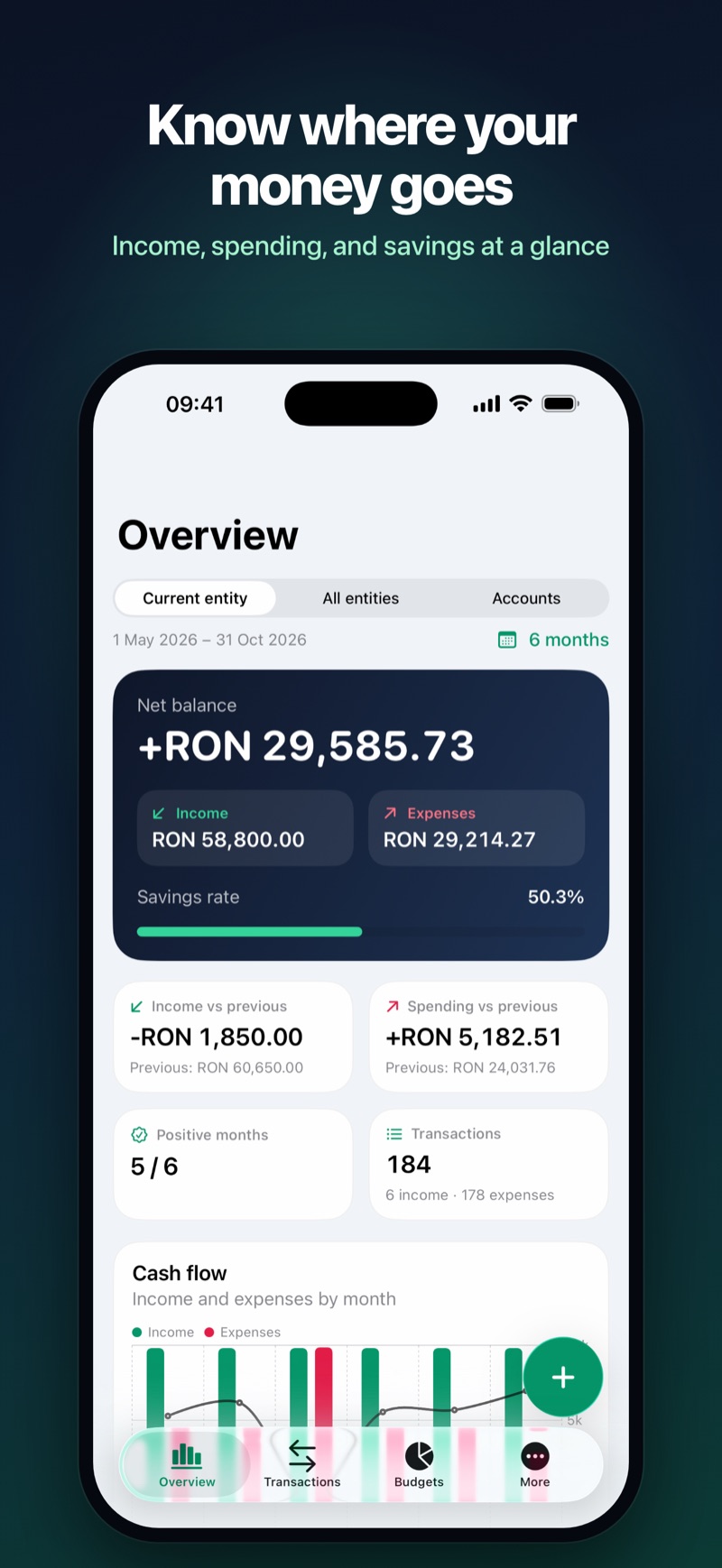
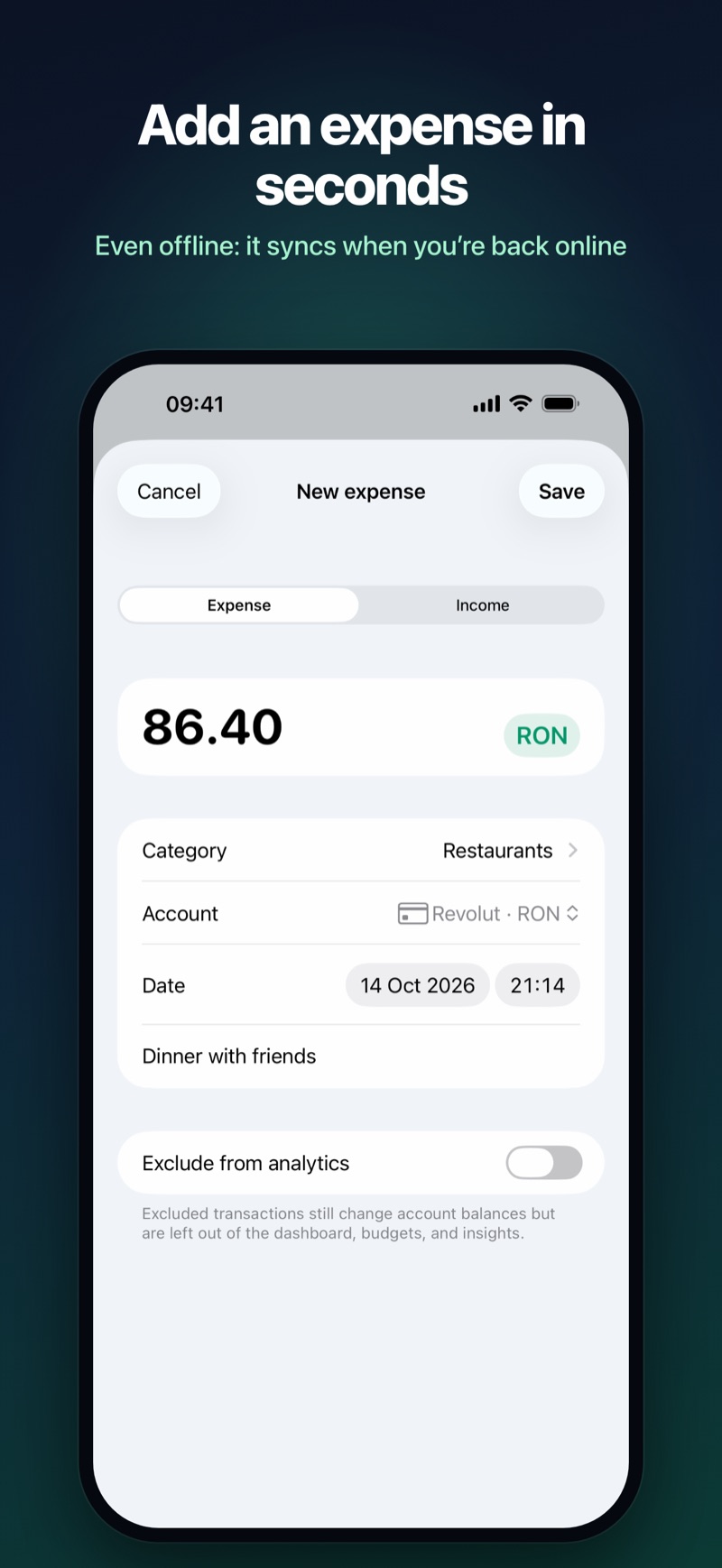
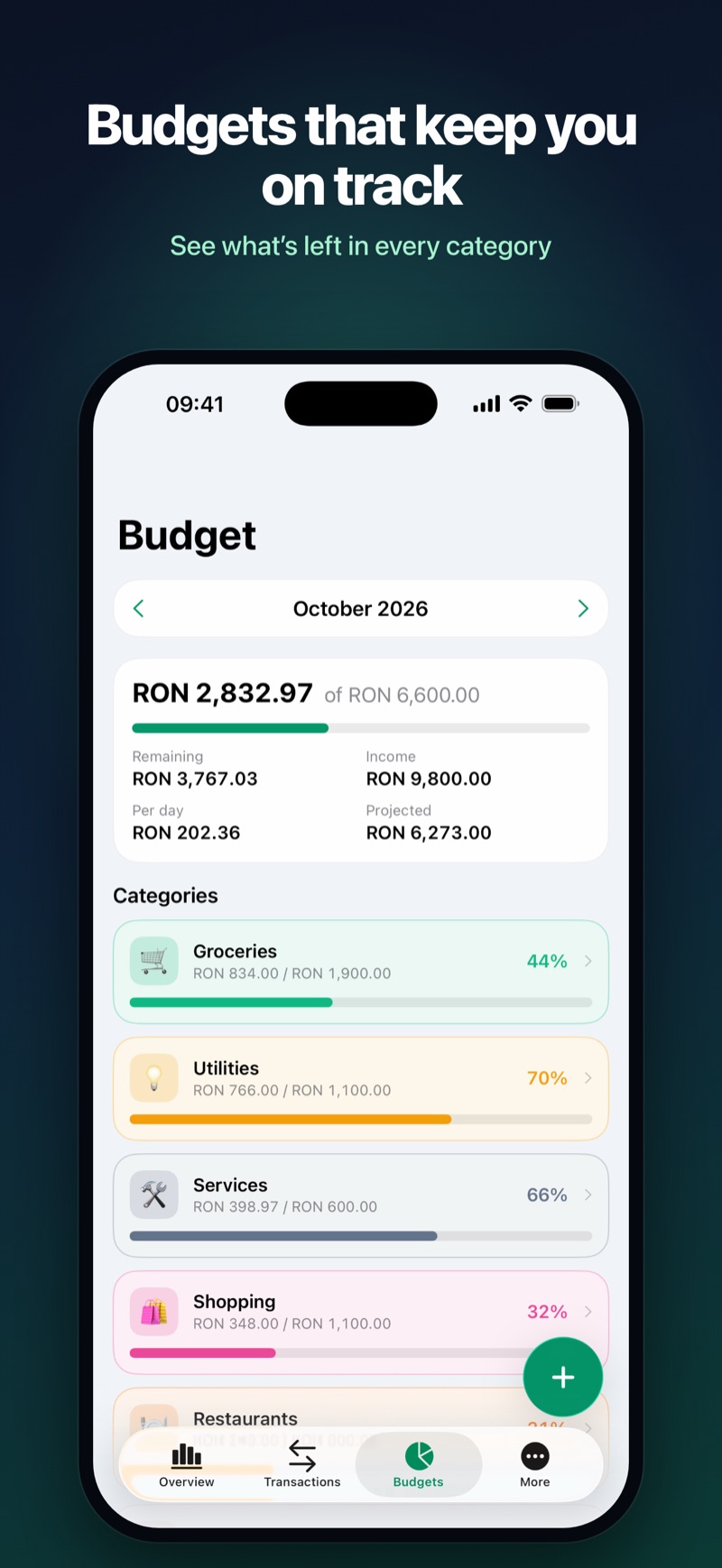
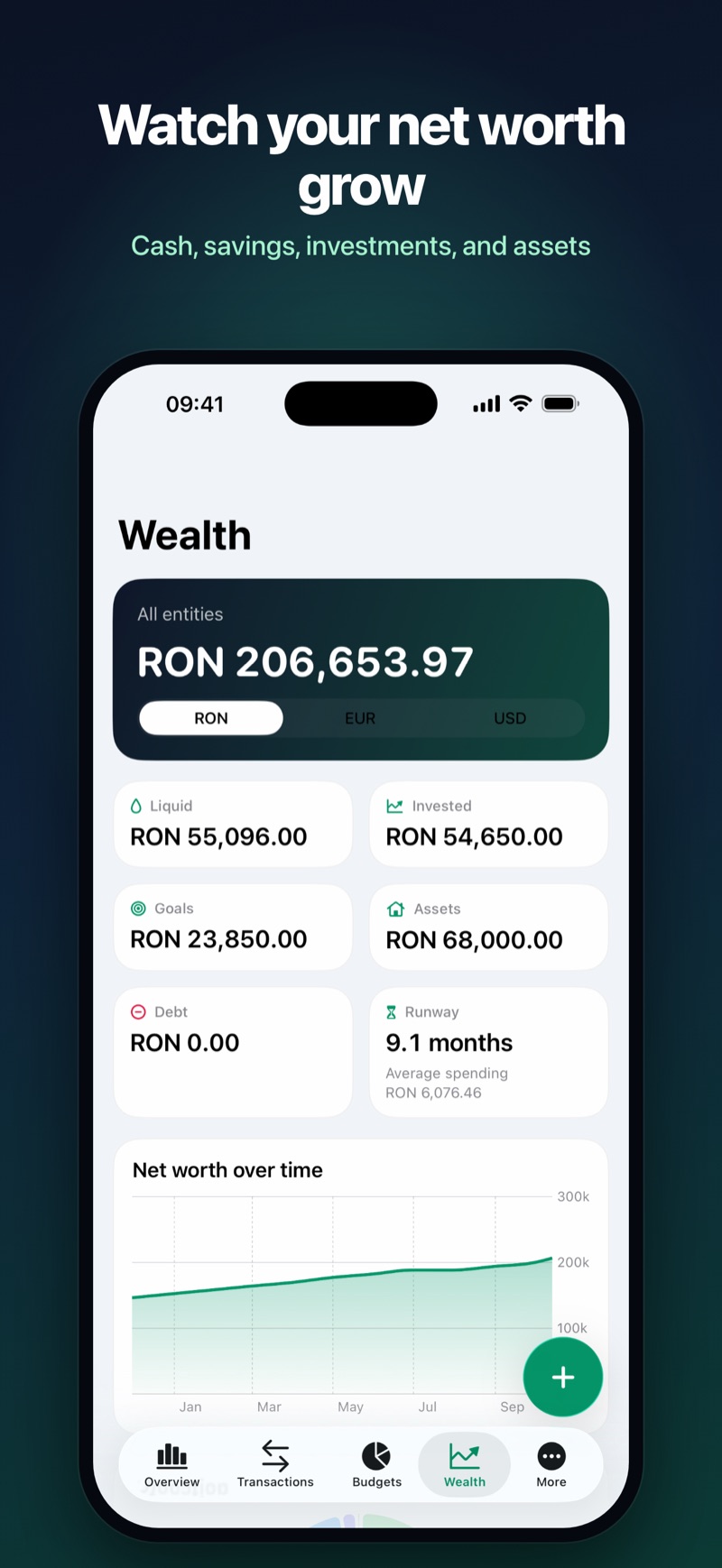
The native iPhone and iPad app for Fluxa, with offline entries, budgets, subscriptions, goals, and net worth in your pocket.
Read the storyHide the story1 post
A SwiftUI client that talks to the same Rails backend as the web app, so one account works on the web, iPhone, and iPad. It’s available in English, Romanian, German, and French.
Income and expenses added offline wait in a queue and sync when the connection returns; each one carries a request id, so a retry never creates a duplicate. The transaction list and the entry form open offline from their last saved copy.
Most unit tests are API contract tests: they decode real JSON captured from the server with the app’s own decoder, so a change on the backend shows up as a failing test instead of a broken screen.
Version 1.0 was released on the App Store in November 2026.
Related posts
-
Image Tagger for macOS
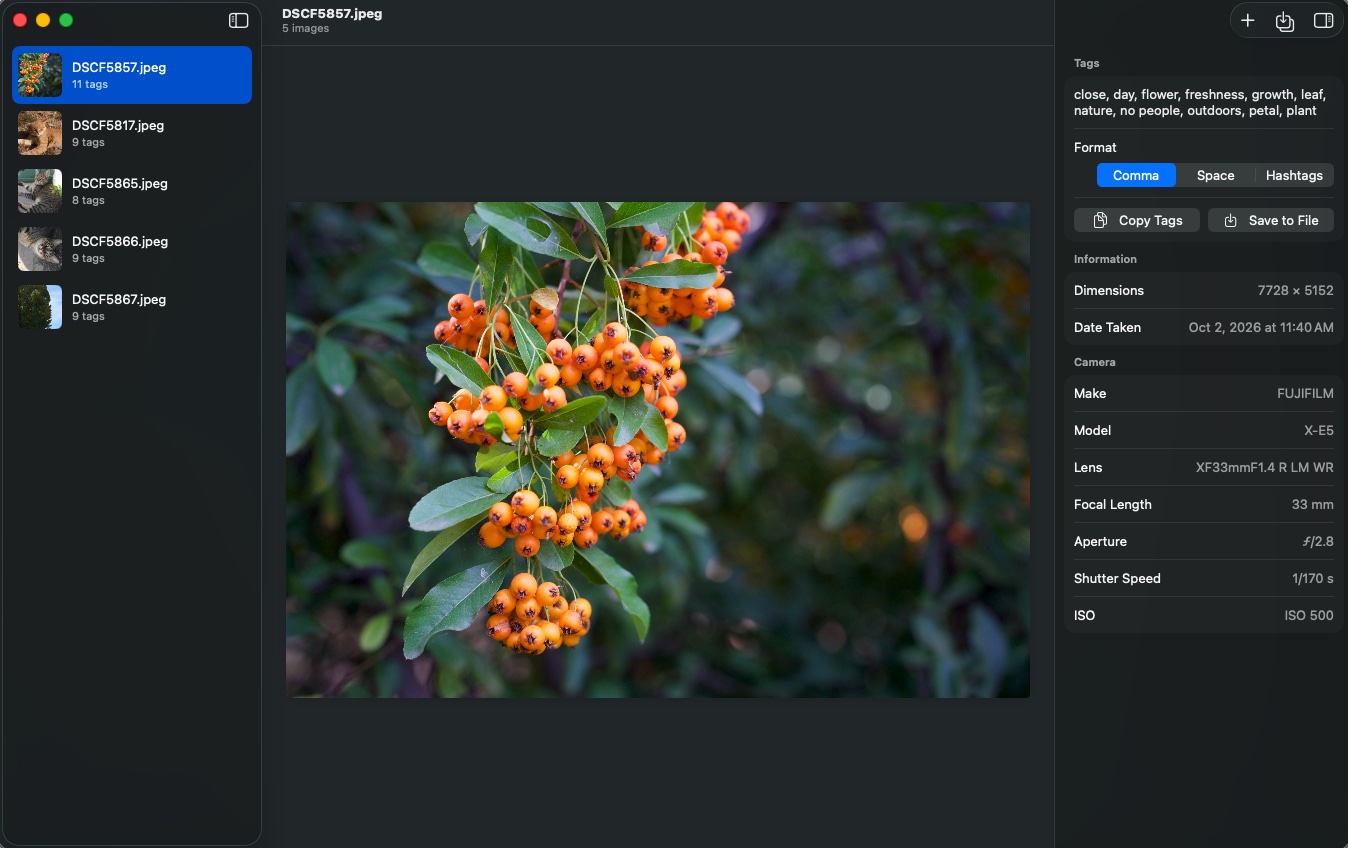
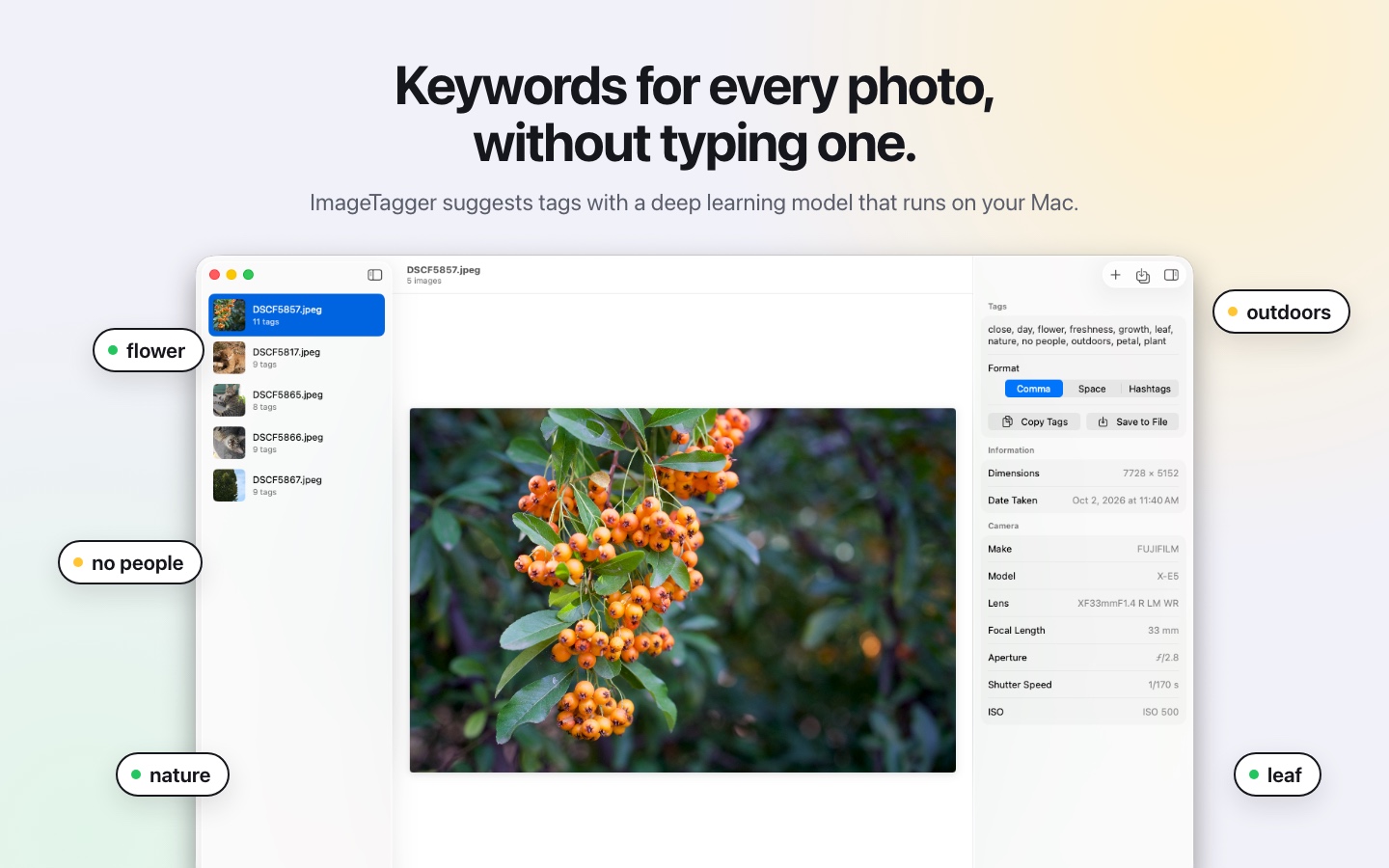
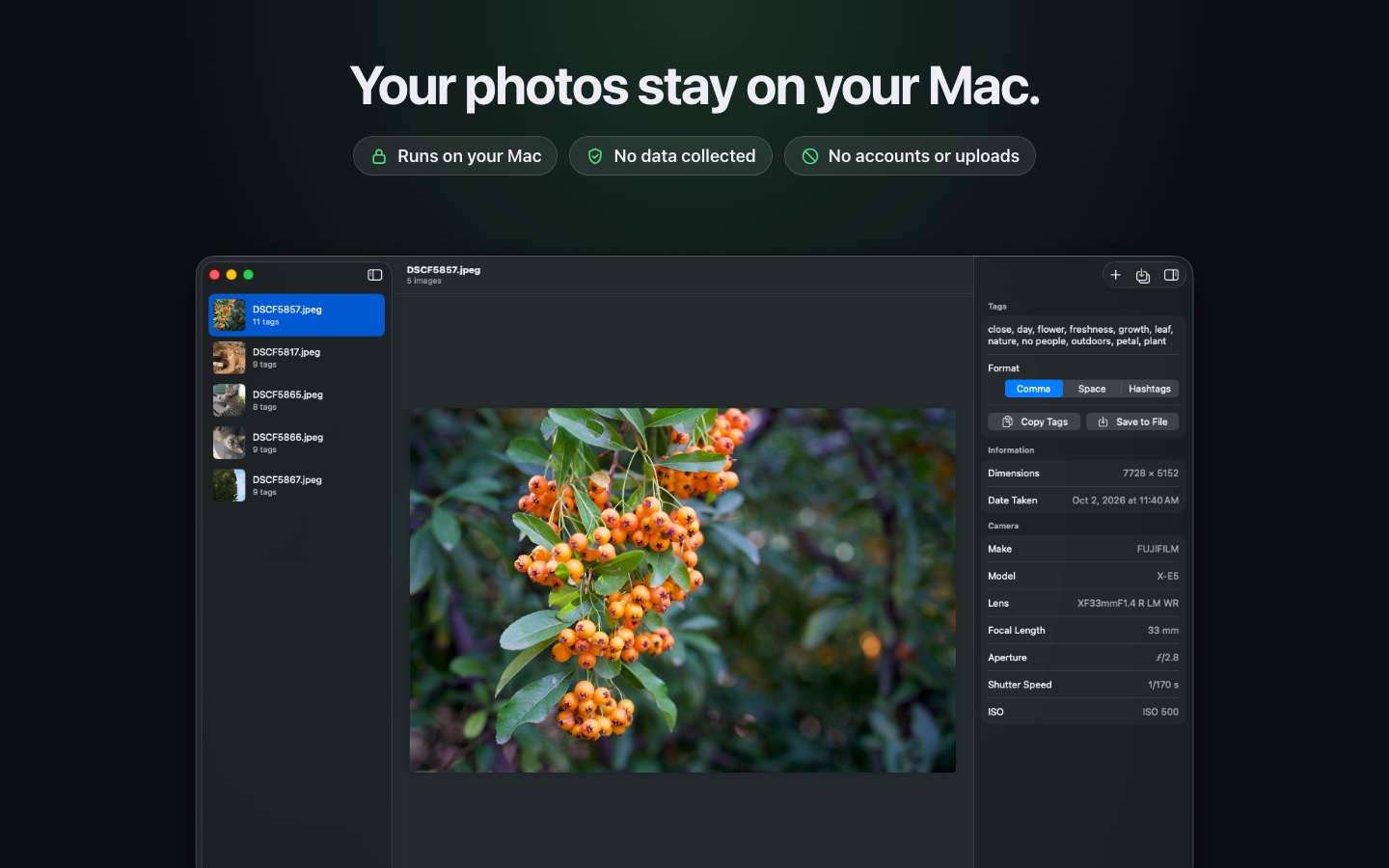
A native Mac port of Image Tagger that tags photos on-device with a Core ML model and saves the keywords into the files.
- ONNX modelTrained with fast.ai
- coremltoolsConverts it to Core ML
- Mac appTags photos and saves keywords
Read the storyHide the story1 post
I ported Image Tagger to a native SwiftUI app for the Mac. The model I trained with fast.ai is converted from ONNX to Core ML and runs on-device, so photos never leave the Mac: there’s no network access, account, or analytics. I kept the weights at 16 bits: 8-bit weights would have halved the 116 MB model, but they changed the predicted tags.
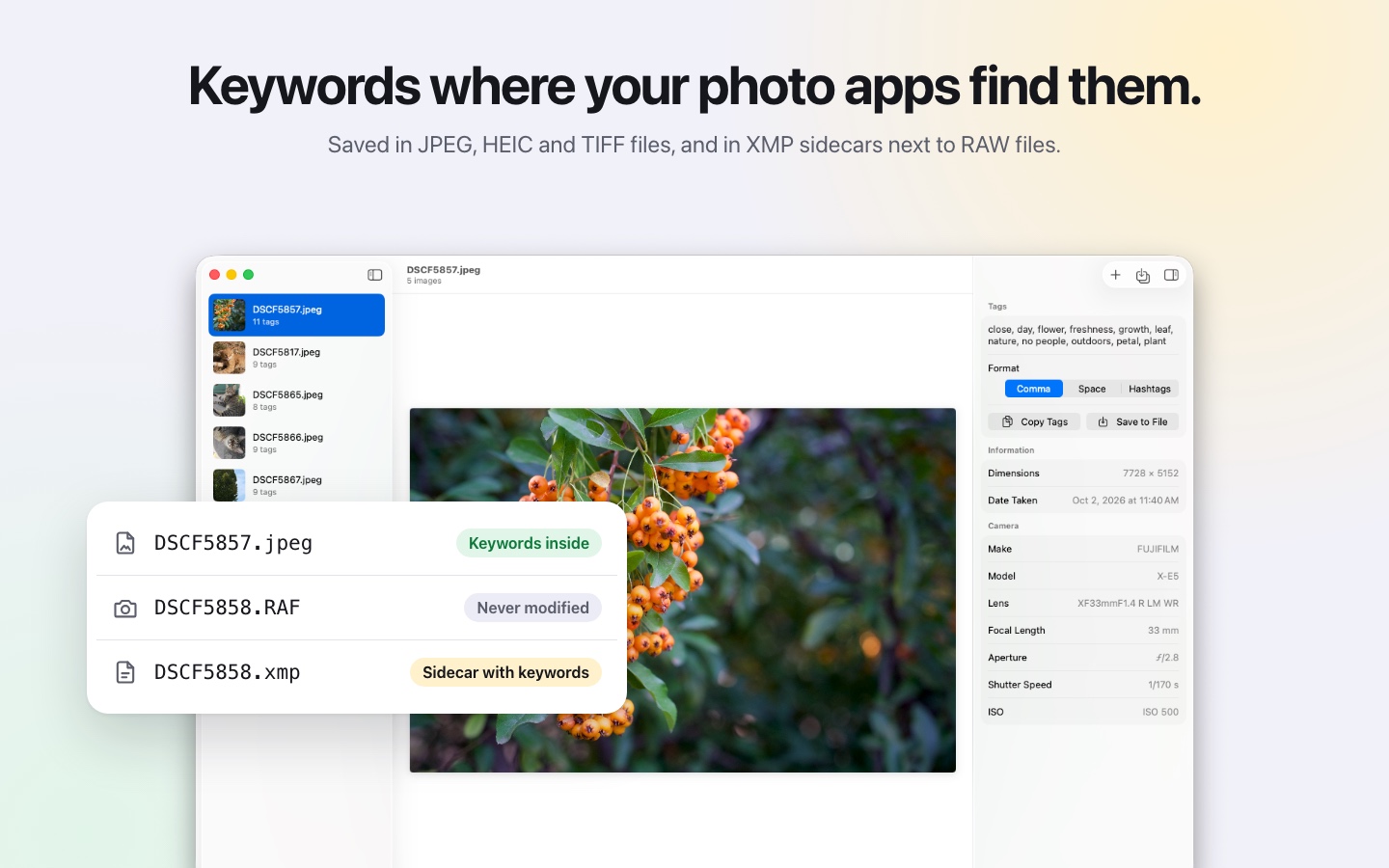
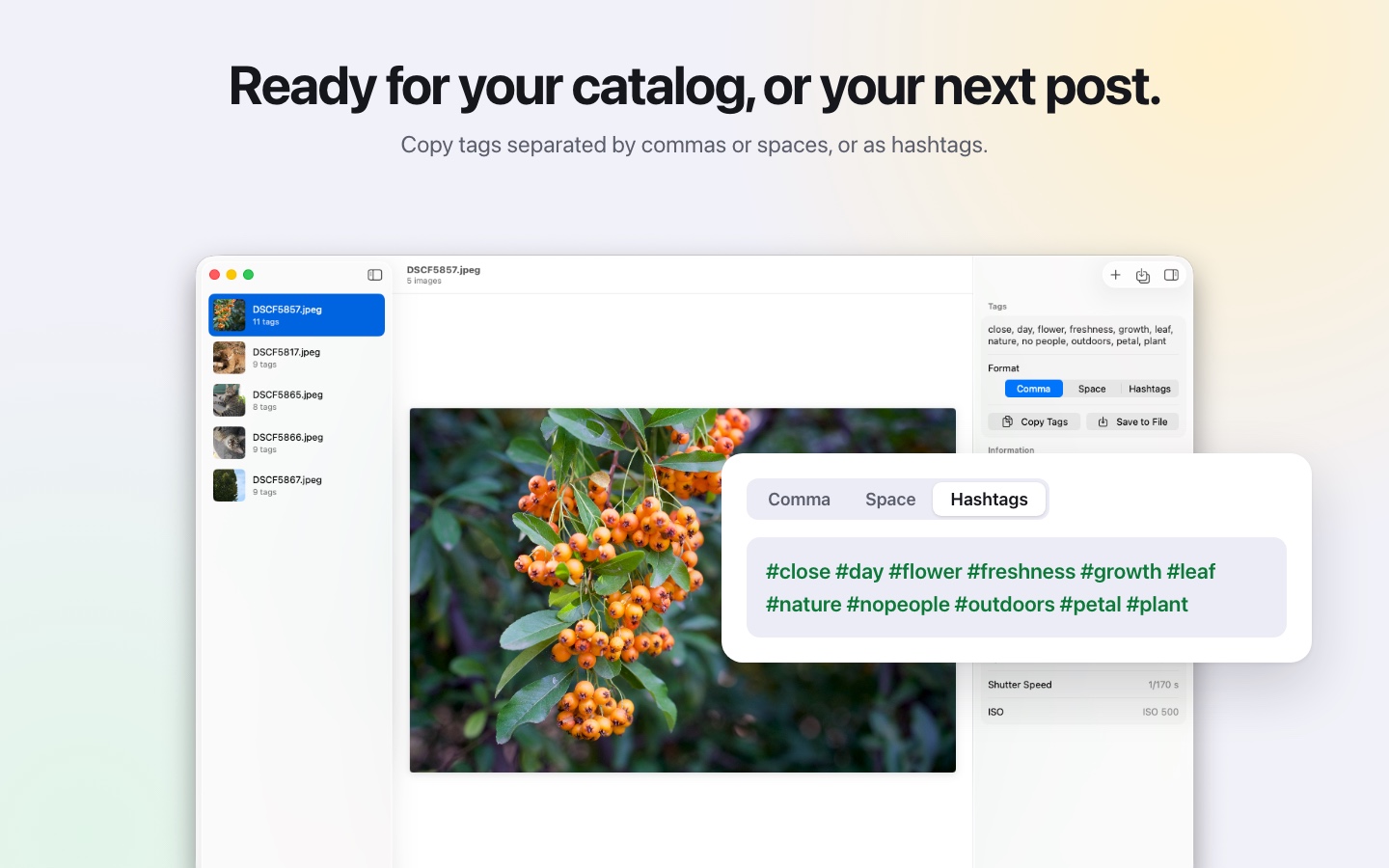
Tags are added to the keywords that Lightroom, Capture One, Bridge, and Spotlight read. JPEG, HEIC, and TIFF files get them without being compressed again. RAW files are never modified; their keywords go to an XMP sidecar, which keeps any develop settings already in it.
The port also fixed a bug: the Kotlin version fed the model the red channel three times instead of red, green, and blue, so a night photo that used to be tagged “tranquil” is now tagged “night”. 🌙
The GitHub release also includes an
imagetaggercommand for tagging folders from the Terminal. The Mac App Store version leaves it out, because every executable in a Mac App Store app has to be sandboxed, and a sandboxed command can’t read the photos in the Terminal’s current folder.Related posts
-
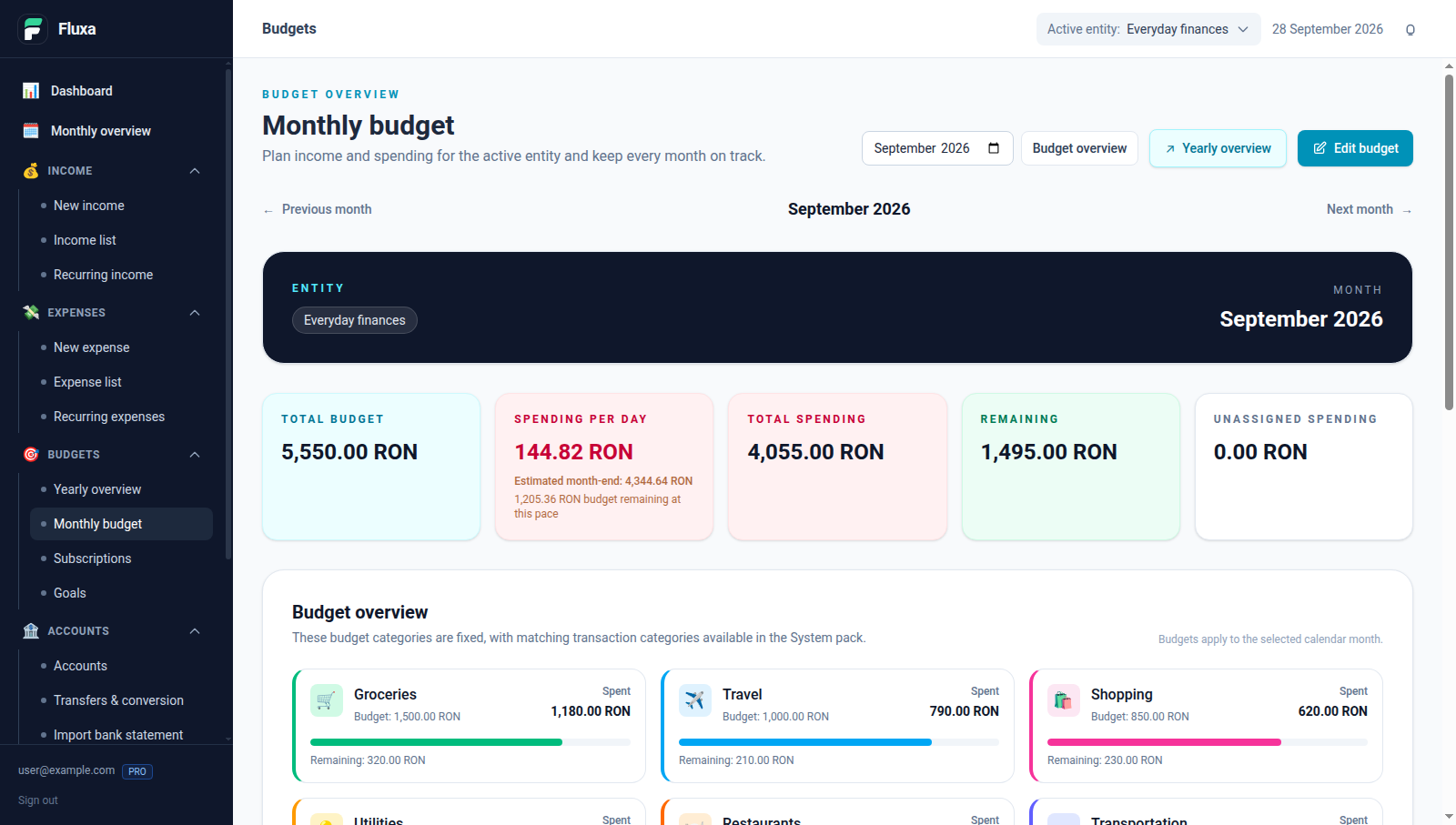
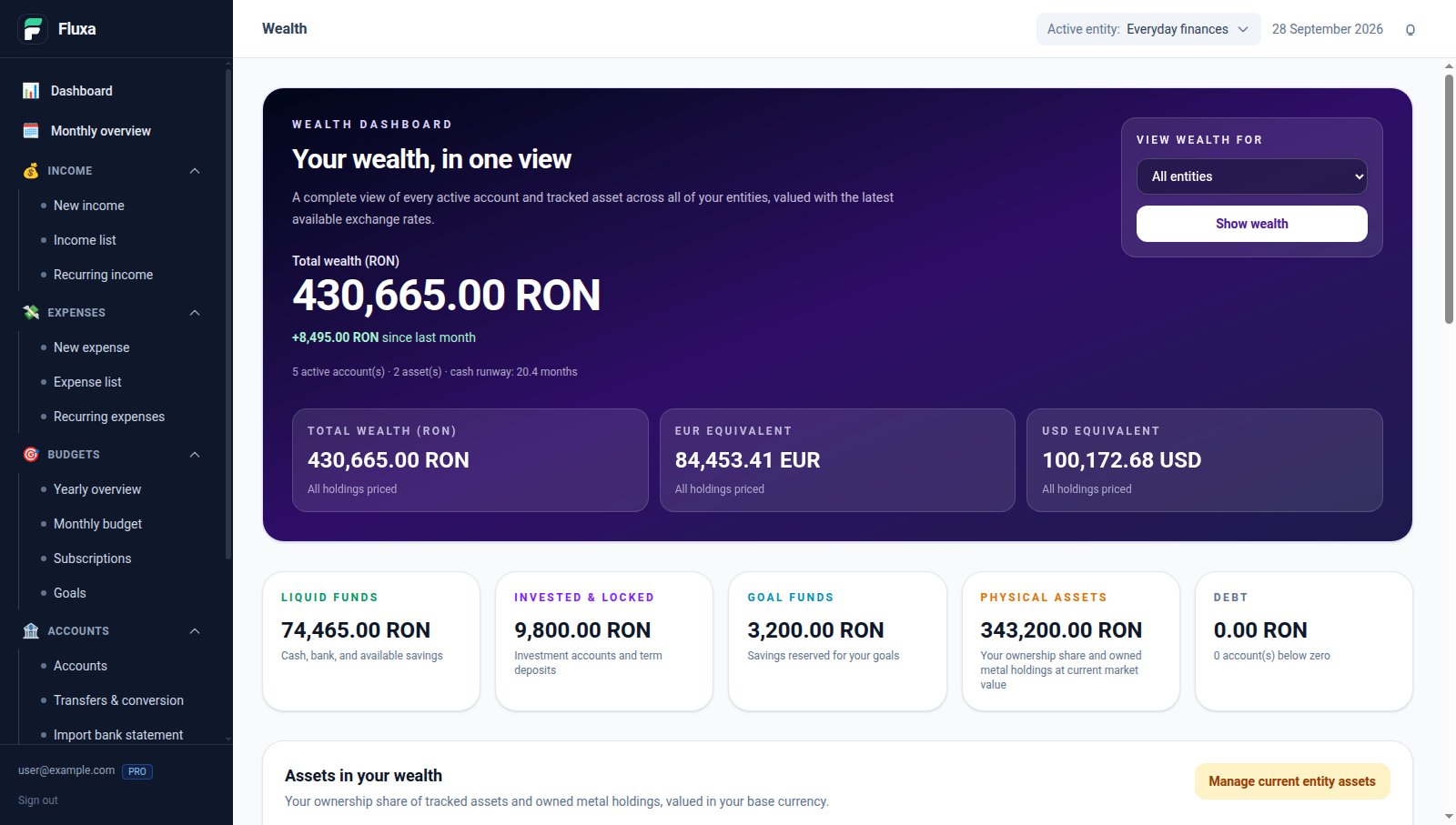
Fluxa
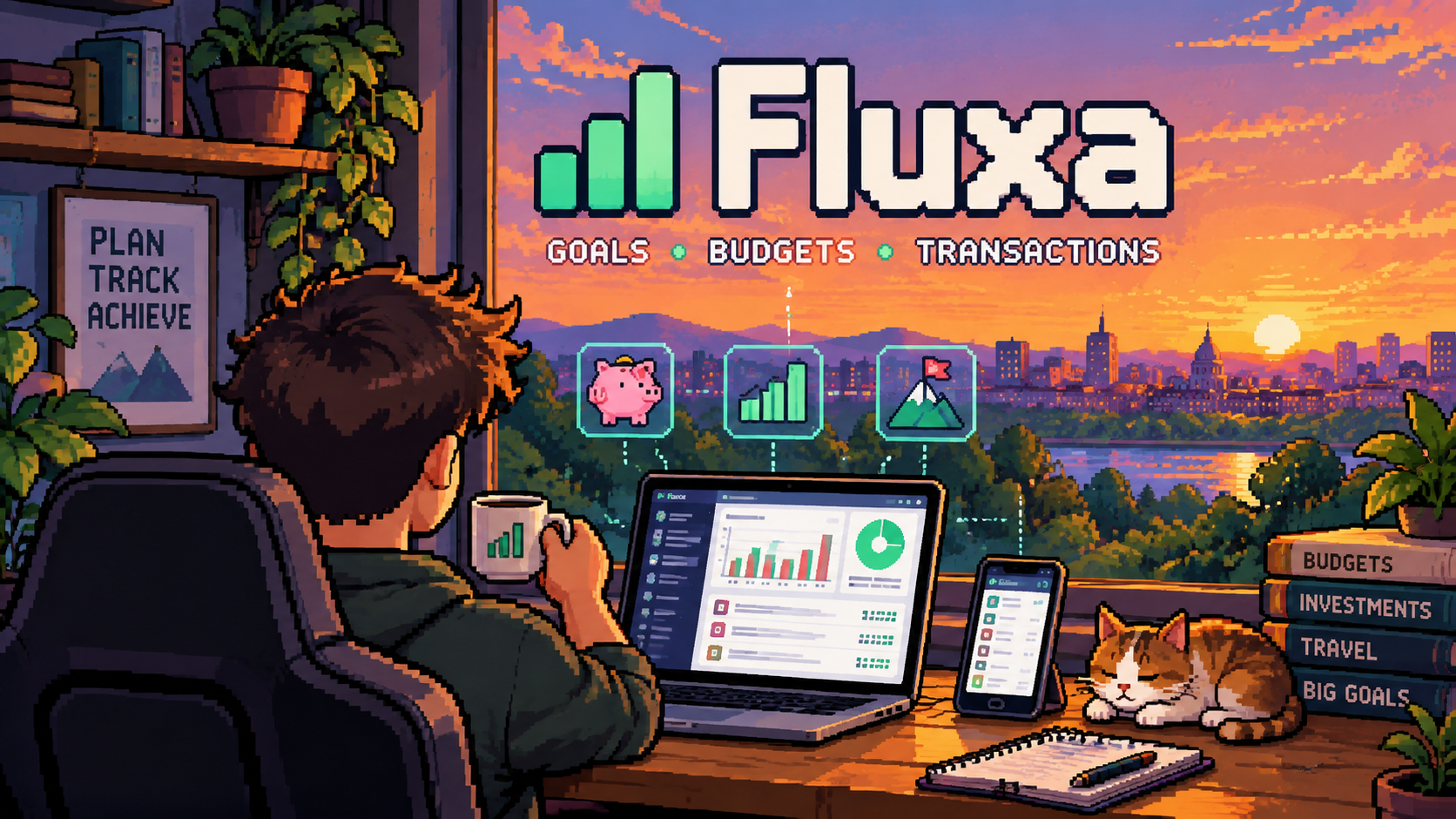
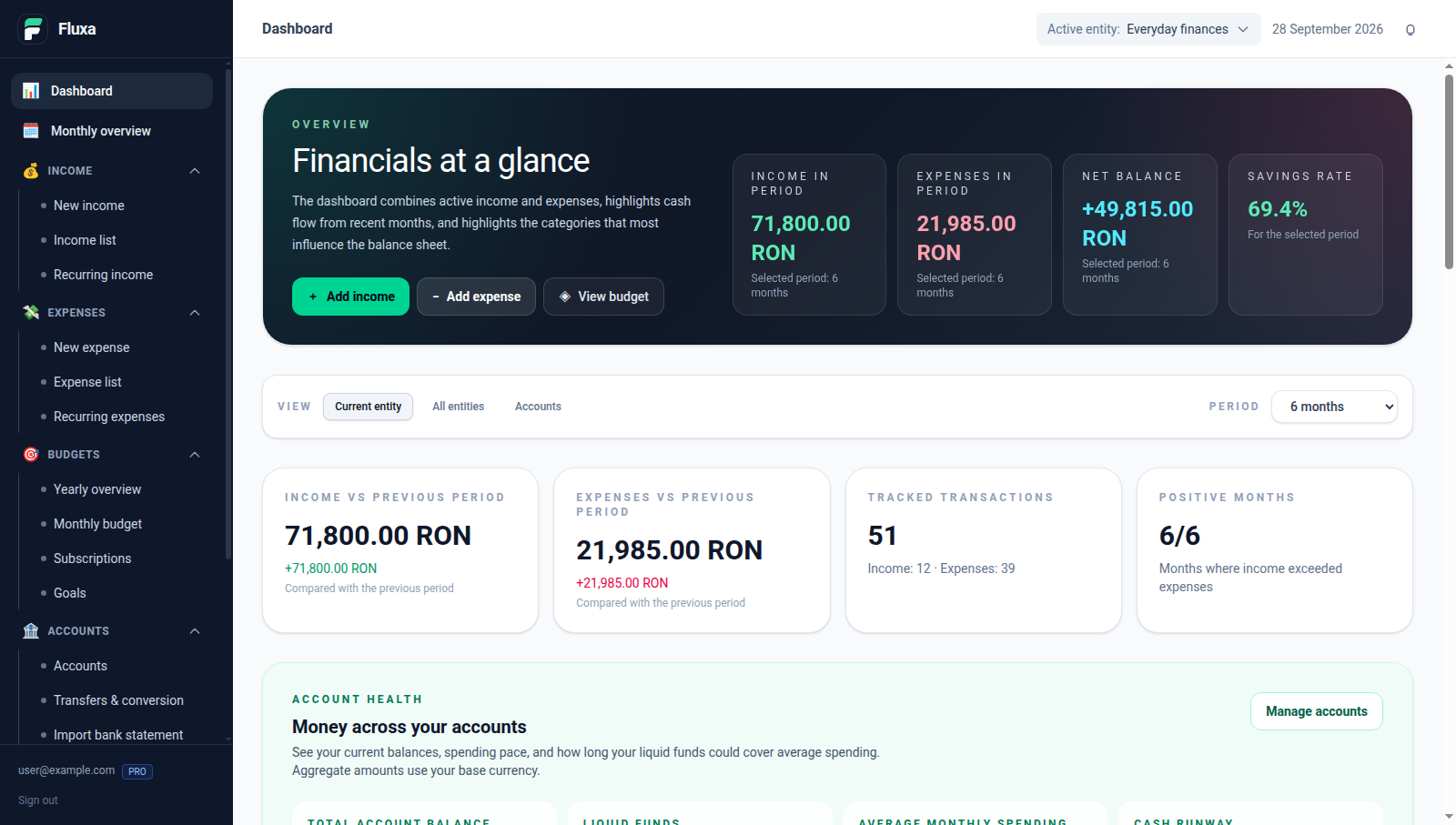
A personal finance app that brings multi-currency transactions, accounts, budgets, savings goals, and wealth into one clear view.
Read the storyHide the story
Rails renders the core pages, while Vue powers interactive charts and bank-statement review. PostgreSQL also backs the Solid Queue, Cache, and Cable services.
-
-
2025
-
Billing & Revenue Management
A B2B billing and revenue-management company, where I work full stack on a workflow automation platform, from its front-end to external APIs, and on core microservices.
- Senior Engineer 2025–now
- Front-endReact components
- BackendWith Java and Python
- APIsVarious functionality
Read the storyHide the story1 post
I work at a company in the B2B billing and revenue-management industry.
I joined as a Senior Software Engineer. I work as a full stack enginner.
Some of the things I’ve worked on so far:
- APIs. I built a service from scratch, with TypeScript and Express.
- Backend in Java and Spring:
- Secret management with envelope encryption.
- Improvements and customizations to the engine.
- Prometheus metrics and health checks for the service.
- The front-end React components and custom functionality.
- Python Microservice. Maitenance, feature development and improvement.
Related posts
-
-
2024
-
Social Media News Bot
Scrapes my favorite news websites and posts their stories on Mastodon and Bluesky.
- ScraperScans news websites
- Redis StreamsQueues new stories
- BotPosts to Bluesky and Mastodon

Read the storyHide the story
I’ve made accounts on Mastodon and Bluesky, and since I’m trying to optimize my time, I’ve decided to scrape my favorite news websites and post their content on the respective platforms.
Written in Rust 🦀 to practice and learn the language. 😅
The bot runs on my NAS at home under Docker, and there are several containers:
- Scraper: scans the websites and posts new data on Redis Streams.
- Redis: a simple to manage key-value database.
- Bot: posts statuses on Bluesky and Mastodon.
The scraper and the bot are basically CLIs; all their configuration is passed via command line arguments.
-
Chip8 Emulator
A Chip8 emulator I finished over the December 2024 holiday break while learning Rust.

Read the storyHide the story
The Chip8 emulation project was on my bucket list for some time, but it was always postponed due to lack of time or not knowing anything about emulators.
In the holiday break of December 2024 I took on this project and completed it in Rust, while also learning Rust 🦀 on the side.
I’ve done it in Rust rather than some familiar programming language because I wanted to learn Rust, and the best way of learning is by doing. Reading books, articles on Rust and doing a few exercises didn’t help that much with learning like this project did.
-
Image Tagger
A cross-platform desktop app that tags my photos using a deep learning model I trained myself.
- Web scraperCollects training photos
- fast.aiTrains the model
- Desktop appSuggests tags for my photos
No longer used: C#No longer used: Avalonia UI

Read the storyHide the story2 posts
As an amateur photographer 📸 who sometimes uploads photos on Unsplash, I find it boring and tedious to tag my images.
I learned to train and make deep learning models from the Practical Deep Learning course. Using this new knowledge, I built this cross-platform desktop tool with C# and Avalonia UI.
To train my model, I’ve used Python and fast.ai, and to get training data I’ve built a performant web scraper in Python that evades detection. I haven’t published the scraper code yet.
Related posts
-
-
2023
-
Jekyll To Hugo
A niche tool I built to move my blog from WordPress to Hugo. The first version took two hours on a train.
Read the storyHide the story1 post
This is a niche tool that I’ve built to move my blog from WordPress to a self-hosted static site powered by Hugo on GitHub Pages.
The initial version was written in 2 hours while I was commuting by train in Romania. It’s far from perfect, but it worked well enough for my use case.
It’s published on PyPI as a Python package, and the documentation is published on GitHub Pages.
Related posts
-
-
2022
-
FastAPI Course
A hands-on Udemy course that teaches you how to build a REST API with FastAPI.
Made with Ubuntu, PyCharm, Kdenlive, Audacity, OBS Studio, DaVinci Resolve, GIMP, Affinity Photo 2

Read the storyHide the story
What was great about this experience is that Udemy allows you to reach lots of students. Unfortunately, you can’t publish free courses longer than two hours.
-
Speedy
An integration bridge that streams JSON data from Apache Kafka into Grafana Loki.
- Apache KafkaJSON topic
- SpeedyConsumes and flattens
- LokiStores and indexes
Read the storyHide the story
Acts as an integration bridge between Loki and Apache Kafka.
We needed to move data from Apache Kafka into Loki, and this project streams the data from Kafka to Loki. Once deployed, it consumes JSON data from a Kafka topic, flattens it and inserts it into Loki.
-
Image Metadata Remover
A command line app that removes GPS data and other metadata from photos, so they’re safe to post online.
Read the storyHide the story
Images contain metadata information such as GPS data and the device used to take the picture.
Since I enjoy posting pictures online, I developed this command line application to remove the metadata from images so that they can be safely uploaded online.
This project was a nice learning experience with C#.
-
Bme680 HomeKit
Turns a Raspberry Pi with a BME680 air quality sensor into a HomeKit accessory, so I can check my home’s temperature from my iPhone.
- BME680Temperature and humidity
- Raspberry PiHomeKit accessory
- Home appOn my iPhone, anywhere

Read the storyHide the story1 post
BME680 is an air quality sensor developed by Bosch.
I used it to measure my home’s temperature and humidity from my iPhone. This project turned my Raspberry Pi into a HomeKit accessory, and because of that I can always view the temperature on my phone even when I’m not at home, thanks to Apple’s home hub features.
Since the project runs on a Raspberry Pi, I’ve installed a Grafana instance to visualize the historical data from my computer.
Related posts
-
-
2021
-
Library for PMS5003
An intuitive C# library for reading air quality data from the PMS5003 particulate matter sensor.
Read the storyHide the story2 posts
PMS comes from particulate matter sensor, and PMS5003 is a relatively economical sensor for measuring air quality.
I have implemented an intuitive library in C# to read data from the sensor using the serial bus.
Related posts
-
-
2019
-
Retroactiune
An end-to-end system for collecting anonymous feedback with single-use tokens, built with .NET Core.

Read the storyHide the story1 post
Retroactiune is a web application built with .NET Core. It is an end-to-end system for managing anonymous feedback, and the goal of the project was to enable its users to collect it.
Let’s say you are a teacher and want to collect feedback for your course. You would generate a set of tokens, then give them to your students. A student can use a token to leave feedback for your course.
Related posts
-
Nucu Car
A .NET IoT platform for reading sensor data on a Raspberry Pi, publishing it to Azure, and viewing it on Android.

Read the storyHide the story6 posts
This was an odd project. With the release of .NET IoT I wanted to implement my friend’s project using dotnet on a Raspberry Pi. Then I dropped the
carpart and focused entirely on a platform for reading and visualizing sensor data.I’ve developed the entire project using C#. It featured a telemetry module that collected data from sensors and published it on Microsoft Azure’s IoT Hub, a gRPC (Remote Procedure Call) server for exposing data to local clients, and a circuit diagram.
It was fun cross-compiling the project for ARM. To visualize sensor data I’ve developed an Android application.
Related posts
-
Snowpiercer Game
A Unity game I built with friends to teach ourselves game development, inspired by Dyna Blaster.
Read the storyHide the story6 posts
I’ve worked on this game with my friends; we built it to teach us Unity. It was inspired by the popular Dyna Blaster game.
Our goal was to become game developers and start a game studio 🚀. Turns out game development is way harder than we thought 😅, and the project remained unfinished 💥.
If you’re curious about this game, you can play it in your web browser. We also got an Android application published on Google Play, but we didn’t release it to the public.
Related posts
-
Cybersecurity
A cyber-security company where I grew from Software Engineer to Senior, building an approximate nearest neighbour database in Go, RAG and MCP services, agentic systems with Agno, a VirusTotal-style platform, and our Kubernetes infrastructure.
- Software Engineer 2019–2023
- Senior Engineer 2023–2025
Read the storyHide the story7 posts
I worked at a cybersecurity company developing solutions for end users and enterprises. I was part of a threat intelligence lab for mobile security, and I worked on a wide range of projects, often leading them from start to finish across architecture, design, front end and back end.
Some of the things I built there:
- An approximate nearest neighbour (ANN) database in Go, built on my own initiative on top of RocksDB. It
scales horizontally, replaced a MongoDB-based solution, made P99 query times 4× faster, and cut the RAM per
instance from 96 GiB to 16 GiB.
- Each MinHash has 128 values, split into 32 bands of 4, and every band is its own RocksDB column family. A query fans out to 32 goroutines that scan for candidates and look for the nearest neighbour at the same time. As soon as one finds it, the search stops and frees its resources.
- A concurrent map (haxxmap) makes sure no Hamming distance is computed twice, a very fast hash function keeps lookups cheap, and RocksDB’s HyperClockCache serves hot requests from memory.
- One CLI builds the index from a file, and another uploads it to Google Cloud Storage or AWS S3, depending on the configuration. Running instances pick up a changed database periodically and keep their metadata in MongoDB.
- Prometheus metrics and OpenTelemetry tracing cover every method.
- A RAG (Retrieval Augmented Generation) service for SMS and ads. It reads the data from the database, embeds it with FlagEmbedding, reduces the roughly 1,000-dimensional embeddings to 128 with principal component analysis (PCA), and indexes them in Elasticsearch, which I set up. Its API lets consumers search by text with filters and pagination, and old indexes are deleted automatically, so the index heals itself.
- Agentic systems with Agno. I built a conversational agent that users could talk to in natural language to analyze malicious clusters.
- A VirusTotal-style platform. I extended its ETL from 2 to 8 data sources, defined and extended the Elasticsearch schema, added endpoints for the new data types, and integrated it with Jira. I also rebuilt the whole front end from scratch with Vue and BootstrapVue, including a graph view with vis.js, JWT authentication and settings, which made developers and users more productive.
- APIs and MCP servers in Python, Node.js and Go: a metadata API, a metadata MCP server, a database query API, the public API behind a scam-detection service (used by its chatbot and newsletter), and other MCP servers that let agentic workflows use the company’s data and systems.
- Kafka Dumper, a configurable tool that consumes Kafka topics, filters and transforms the stream, and dumps it to a file or to MongoDB. It’s fault tolerant with at-least-once delivery, exports Prometheus metrics, keeps its metadata in MongoDB, and has unit tests for the different cases.
- Kubernetes resource limits for Apache Flink. I proposed and implemented FLINK-15648 in the open-source project, which reduced our cloud costs.
- Real-time stream processing jobs with Apache Flink, which I developed, deployed and maintained.
- The Metadata Processor, whose initial architecture I proposed.
- The infrastructure. I set up microk8s and deployed all of our services on Kubernetes, across on-premise machines and the cloud, with Helm charts and operators. I configured logging, metrics, Grafana alerts, OpenTelemetry tracing and Velero backups. It ran without problems, and I taught my colleagues to use Kubernetes.
- Internal web apps and libraries: Python (FastAPI, Flask) back ends with Vue.js front ends, and shared libraries in Python and Go.
I also mentored colleagues and taught the LigaAC cloud computing lab to 12 undergraduate students from UPT.
Related posts
- How I got my PR merged into Apache Flink
- Container log monitoring on Microk8s with Loki, Grafana and Promtail
- Apache Flink Checkpoints on S3 and S3 compatible storage
- How to create a ServiceMonitor in Microk8s: Observability Tutorial
- Tracing Node.js APIs with OpenTelemetry
- How to use RocksDB with Go
- Introduction to MCP Servers and writing one in Python
-
-
2018
-
simplFT
A simple and concurrent file transfer server, built as the final project for my Computer Networks class.
Read the storyHide the story
A user would interact with it using the
nc(netcat) Unix command line utility to upload and download files from the server.While working on this project, I also had the opportunity to debug it using Wireshark, and I had TravisCI (Continuous Integration) set up for running unit tests.
-
nuculabs.dev
My personal blog, started to improve my writing skill and share my knowledge with the world.
- WordPress 2018–2023
- Hugo 2023–2026
- Jekyll 2026–now
No longer used: HugoNo longer used: GitHub PagesNo longer used: Minimal Mistakes
Read the storyHide the story3 posts
I wrote my first article, How to get started with FreeRTOS and ESP8266, on my WordPress-based blog. Since then I moved the blog to a self-hosted static site generator powered by Hugo on GitHub Pages.
Some of my articles were also published by FreeCodeCamp. 🎉
As of 2026, I’ve migrated my blog to Jekyll.
Related posts
-
-
2017
-
benchmark-scoreboard
The website and server that displayed results for a benchmarking tool, built by a team of four students.
Read the storyHide the story
This project was done for the Computer Organization class. We were a small team of four students, and the goal was to build a benchmarking tool. I was in charge of building the website and server for displaying the benchmark results in a web browser. My teammates were responsible for the benchmarking desktop application and designed the benchmark scenarios.
I used Python and Flask for the backend server and Twitter Bootstrap for the UI. For the database, I used MySQL and deployed the backend on a Linux VPS.
-
-
2016
-
Automotive
An automotive company where I wrote embedded C for car infotainment systems, first as an intern and then as a Software Developer.
- Intern 2016–2017
- Software Developer 2017–2019
Made with Git, Gerrit, GDB, Valgrind, VectorCAST, Klocwork, Bullseye, Jira, Confluence
Read the storyHide the story
I worked at an automotive company developing embedded software, electronic control systems, vehicle connectivity, and AI-driven driver-assistance technology.
- As an intern, I developed software for an infotainment platform and learned C, GDB, Valgrind, Bullseye, Klocwork and Embedded Linux.
- As a Software Developer, I developed embedded software for car infotainment systems in ANSI C, and learned Gerrit, T-Kernel, VectorCAST, audio engineering and microcontroller programming.
I was on trial for a promotion to Software Developer II before I left.
-
-
2015
-
-
Read the storyHide the story
As I was learning Git, GitHub and web development, I developed a small Hangman game using JavaScript.
It featured a full layout for desktop web browsers and a mobile layout. It also played different sounds when the player lost or won the game.
-

No projects match these filters.